


 พล.ต. หญิง รศ. พญ. อภัสนี บุญญาวรกุล
แผนกต่อมไร้ท่อ กองอายุรกรรม
โรงพยาบาลพระมงกุฎเกล้า
การรักษาโรคอ้วนมีการพัฒนาไปอย่างมากในช่วงหลายปีที่ผ่านมา มีการนำ gut hormone หลายชนิดมารักษาโรคอ้วน เริ่มจากการใช้ Glucagon like peptide -1 (GLP-1) ปัจจุบัน Glucose-dependent insulinotropic polypeptide (GIP) มีบทบาทมากขึ้น อย่างไรก็ตามการใช้ GIP เพียงอย่างเดียว ไม่มีข้อมูลในการรักษาโรคอ้วน ต้องใช้ GIP ร่วมกับ GLP-1 RA โดยมีข้อมูลทั้ง GIPR agonist และ GIPR antagonist
GIP หลั่งจาก enteroendocrine K cells มี 42 amino acid peptide และ 30 amino acid peptide (GIP 1- 42 และGIP 1-30)) โดย GIP 1-42 NH2 และ 1-30 NH2 มี biological activities เหมือนกัน มีผลกระตุ้นอินซูลินทำให้น้ำตาลในเลือดลดลง มีผลลด bone resorption ในภาวะ postprandial กระตุ้น intestinal blood flow และ การสะสมไขมันที่ adipose tissue ในภาวะ fasting กระตุ้น lipolysis
GIP ถูก degrade โดย dipeptidyl peptidase 4 (DPP 4) enzyme ทำให้ GIP มี half-life ในร่างกายประมาณ 7 นาที และมีการปรับเปลี่ยน N-terminal ของ GIP เป็น GIP (3-42) และ GIP(3- 30)NH2 (รูป 1) GIP (3-42) เป็น antagonist ของ GIPR มี low affinity ต้องใช้ขนาดสูงถึงจะมีประสิทธิภาพในการยับยั้ง GIPR ส่วน GIP(3-30)NH2 มี higher affinity มีคุณสมบัติยับยั้ง GIPR ได้มากกว่า GIP (3-42) 20 เท่า
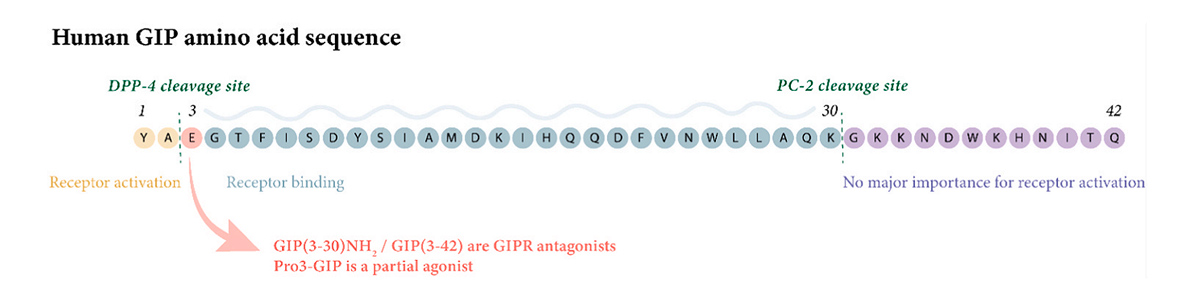 รูป 1 Sequence of human glucose-dependent insulinotropic polypeptide (GIP). DPP-4, dipeptidyl peptidase 4.
GIPR จัดเป็น G protein-coupled receptors, class B1 ถูกกระตุ้นด้วย GIP (1-42) และ (1-30)NH2 การกระตุ้น GIPR ใน acute และ chronic มีผลแตกต่างกัน (รูป 2) การศึกษาในผู้ป่วยที่อ้วนพบว่าการให้ยา tirzepatide (GLP-1RA/ GIP RA) มีผลในการลดน้ำหนัก เนื่องจากเป็น biased agonism (reduced b-arrestin recruitment และ internalization relative to G protein coupling ทำให้ GLP-1 ออกฤทธิ์ได้มากขึ้น) ขณะที่การศึกษาของยา Maridebart cafraglutide (GLP-1 RA/ GIP receptor antagonist) ใน phase 2 study การให้ยาเดือนละครั้ง ในผู้ที่อ้วนพบว่าลดน้ำหนักได้ 12.3% ถึง 16.2% ที่ 52 สัปดาห์ ในขณะที่ placebo ลด 2.5% ในผู้ที่อ้วนและเป็นเบาหวานลดน้ำหนักได้ 8.4% ถึง 12.3% ที่ 52 สัปดาห์ ในขณะที่ placebo ลด 1.7% ดังนั้นมีกลไกที่นำมาอธิบายผลของ GIPR antagonists เช่น การกระตุ้นแบบ acute หรือ chronic effect (รูป 2) รวมทั้งผลของการให้ร่วมกับ GLP-1RA (รูป 3, ตารางที่ 1)
Acute effect:
การกระตุ้น GIPR จะมี signals หลักผ่าน G protein Gαs และ GIPR จับกับ beta arrestins เพื่อสิ้นสุด G protein-mediated signalling และเริ่มต้น receptor internalization ขณะที่ GIPR antagonist จะไม่มีทั้งกระตุ้น G protein และ beta arrestins
Chronic effect:
การมี chronic GIPR activation โดย GIP agonists จะส่งผลให้เกิด receptor internalization มากขึ้น ทำให้ receptor ถูก degrade จำนวน receptor บนผิวเซลล์ลดลง และการกระตุ้นน้อยลงหรือ functional antagonism chronic GIPR antagonist exposure ทำให้มีจำนวน receptors บนผิวเซลล์เพิ่มขึ้น และสามารถถูกกระตุ้นแบบ agonist (สมดุลของ agonist-antagonist equilibrium)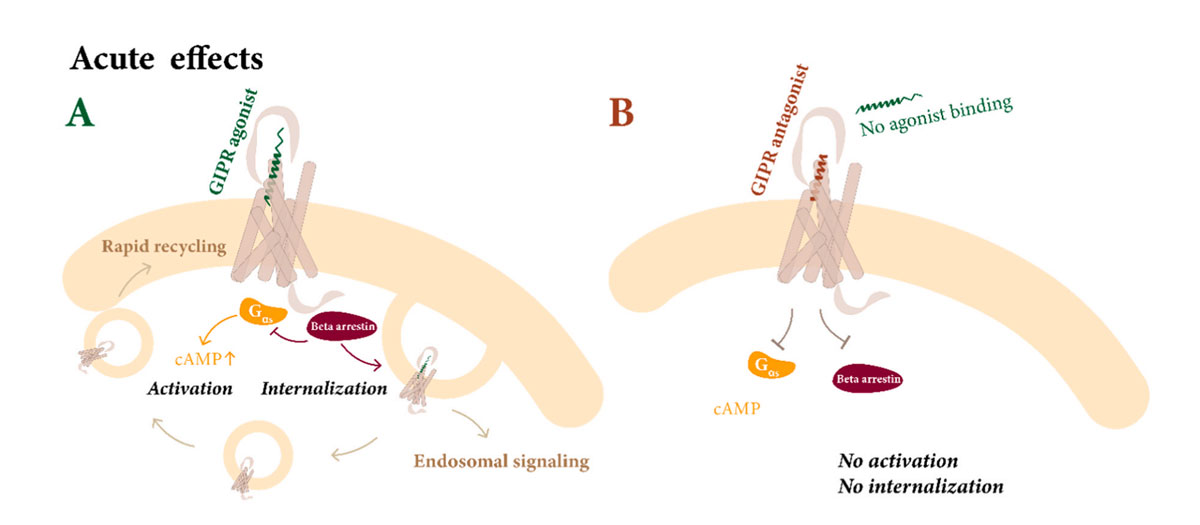
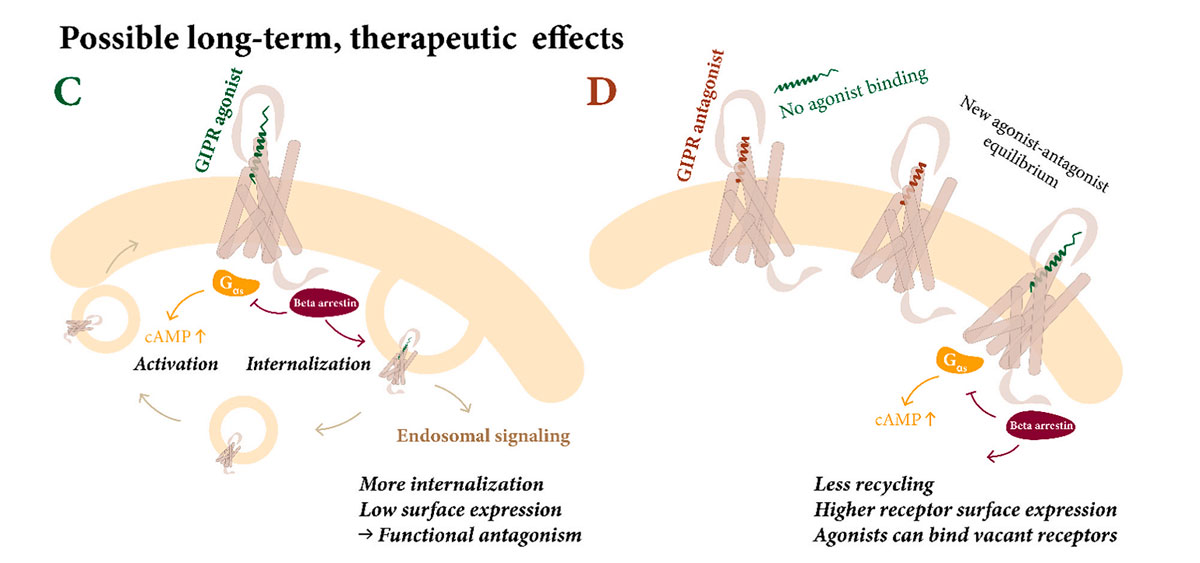
รูป 2 Cellular effects of glucose-dependent insulinotropic polypeptide receptor (GIPR) agonists and antagonists following acute administration (A, B) and chronic GIPR targeting (C, D).
 รูป 3 Combinations of GIP receptor targeting treatments and GLP-1 receptor agonism.
ตารางที่ 1 Action of GIP agonists and antagonists with or without GLP-1R agonists in preclinical studies on key outcomes for obesity therapeutics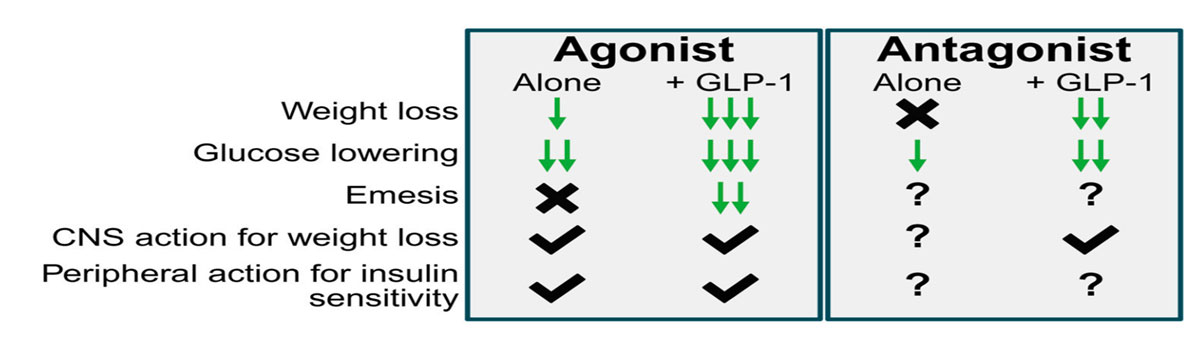
ในอนาคตยังคงมีการพัฒนายาลดน้ำหนักในกลุ่ม gut hormone ดังนั้นการติดตามการศึกษาจะช่วยทำให้มีความเข้าใจกลไกการออกฤทธิ์ และ การนำมาใช้ในทางคลินิกต่อไป
- Douros JD, Mowery SA and Knerr PJ. The Premise of the Paradox: Examining the Evidence That Motivated GIPR Agonist and Antagonist Drug Development Programs. Clin. Med. 2025, 14, 3812.https://doi.org/10.3390/ jcm14113812
- Jastreboff AM, Ryan DH, Bays HE, Ebeling PR, Mackowski MG, et al. Once-Monthly Maridebart Cafraglutide for the Treatment of Obesity – A Phase 2 Trial. NEJM 2025, June 23, DOI: 10.1056/NEJMoa2504214
- Rosenkilde MM, Lindquist P, Kizilkaya HS, Gasbjerg LS. GIP-derived GIP receptor antagonists – a review of their role in GIP receptor pharmacology. Peptides 177 (2024) 171212
- Hansen FK, Helsted MM, Kizilkaya HS, Lund AB, Rosenkilde MM and Gasbjerg LS. The evolution of the therapeutic concept ‘GIP receptor antagonism. The evolution of the therapeutic concept ‘GIP receptor antagonism. Endocrinol. 16:1570603. doi: 10.3389/fendo.2025.1570603


