


 นพ. วิศัลย์ มูลศาสตร์
นายแพทย์ทรงคุณวุฒิ และหัวหน้ากลุ่มแผนปฏิบัติการชาติ
การป้องกันและควบคุมโรคติดเชื้อและเชื้อดื้อยาในโรงพยาบาล
สถาบันบำราศนราดูร กรมควบคุมโรค
สรุปการประชุมใหญ่ประจำปี 2569 ครั้งที่ 30 สมาคมโรคติดเชื้อในเด็กแห่งประเทศไทย วันที่ 10 พฤษภาคม 2569
การใช้ยาต้านจุลชีพผู้ป่วยนอกและในโรงพยาบาลแผนกกุมารเวชกรรมแม้เพียงช่วงสั้น ๆ สามารถเปลี่ยนแปลงจุลชีพในร่างกายของเด็กได้นานถึง 6 เดือน อาจส่งผลให้เกิดโรคเรื้อรังต่าง ๆ เช่น ภาวะทุพโภชนาการ โรคระบบเผาผลาญ และโรคภูมิคุ้มกันทำลายตนเอง นอกจากนี้ยังมีความเสี่ยงเชื้อแบคทีเรียดื้อยาเพิ่มขึ้นมีผลเสียต่อสุขภาพในระยะยาว ดังนั้น การทำความเข้าใจแนวโน้มและปัจจัยเสี่ยงที่เกี่ยวข้องกับการสั่งจ่ายยาต้านจุลชีพในเด็กจึงมีความสำคัญอย่างยิ่ง ต่อการพัฒนามาตรการเพื่อเพิ่มประสิทธิภาพการใช้ยาต้านจุลชีพในเด็กให้เหมาะสมที่สุด'”
ในเวชปฏิบัติการใช้ยา empirical treatment โดยการคาดคะเนเชื้อตามประสบการณ์ก่อนทราบผลเพาะเชื้อ มีการใช้ยาต้านจุลชีพอย่างแพร่หลายและเลือกยาออกฤทธิ์กว้าง (broad-spectrum) มากเกินความจำเป็น จึงต้องมีการกำกับการใช้ยาต้านจุลชีพหรือที่เรารู้จัก คือการใช้ antimicrobial stewardship (ASP) เพื่อส่งเสริมการใช้ยาต้านจุลชีพอย่างเหมาะสมและมีความรับผิดชอบ โดยเกี่ยวข้องหลายประเด็น เช่น การกำหนดแนวทางการรักษาเพื่อนำมาสร้าง empirical treatment guidelines ช่วยให้แพทย์เลือกยาได้แม่นยำ แม้จะยังไม่ทราบผลการตรวจทางห้องปฏิบัติการเพื่อลดความเสี่ยงในการใช้ยาที่เชื้อดื้อยาไปแล้ว หรือการใช้ยาที่แรงเกินความจำเป็น การควบคุมการเข้าถึงยา การทบทวนการรักษา และการตรวจสอบซ้ำเพื่อประเมินการ de-escalation 3 นอกจากนี้การป้องกันและควบคุมการติดเชื้อ (infection prevention and control: IPC) และ ASP เป็นกลไกหลักให้เกิด rationalize and optimize antimicrobial therapy โดยเน้นไปที่ 3 องค์ประกอบหลัก ได้แก่ 1. การบูรณาการข้อมูล (surveillance integration) เช่น ใช้ข้อมูลเชื้อดื้อยาจากงาน IPC มาวิเคราะห์ร่วมกับปริมาณการใช้ยา (drug consumption) เพื่อสร้าง local antibiogram ส่งผลให้การรักษาแบบ empirical treatment ในโรงพยาบาลมีความแม่นยำตามระบาดวิทยาของแต่ละพื้นที่ 2. มาตรการเชิงรุก (technical interventions) สนับสนุนการใช้ rapid diagnostics เพื่อให้ทราบชนิดเชื้อเร็วขึ้น ช่วยให้แพทย์สามารถเลือกยาต้านจุลชีพได้อย่างเหมาะสมและทันท่วงที ลดการใช้ broad-spectrum นานเกินไปและมีการทำ point-of-care checklists ใช้ในการประเมินความจำเป็นของยาต้านจุลชีพ เช่น antibiotic timeout 48 – 72 ชม. 3. การพัฒนาศักยภาพบุคลากร (capacity building) เช่น ฝึกอบรมด้าน IPC ให้มีความรู้ด้าน ASP เพื่อให้สามารถให้คำแนะนำเรื่องการ IV-1o-oral switch หรือการหยุดยาเมื่อไม่มีข้อบ่งชี้ 3,4
ปัจจุบันการใช้ยาต้านจุลชีพอย่างสมเหตุสมผลและให้เกิดประสิทธิภาพสูงสุด (rationalize and optimize antimicrobial therapy) เป็นหลักการสัมพันธ์กับ ASP โดยองค์การอนามัยโลกได้กำหนดและเน้นการเลือกใช้ยาต้านจุลชีพให้เหมาะสมที่สุด โดยใช้หลักการ 5 Right เพื่อผลการรักษาทางคลินิกดีที่สุด ลดความเป็นพิษและผล
กระทบต่อการดื้อยา 3
รายละเอียดดังตารางที่ 1
ตารางที่ 1 การกำกับดูแลการใช้ยาด้านจุลชีพมีหลักการ 5 Right ประกอบไปด้วย 3 – 6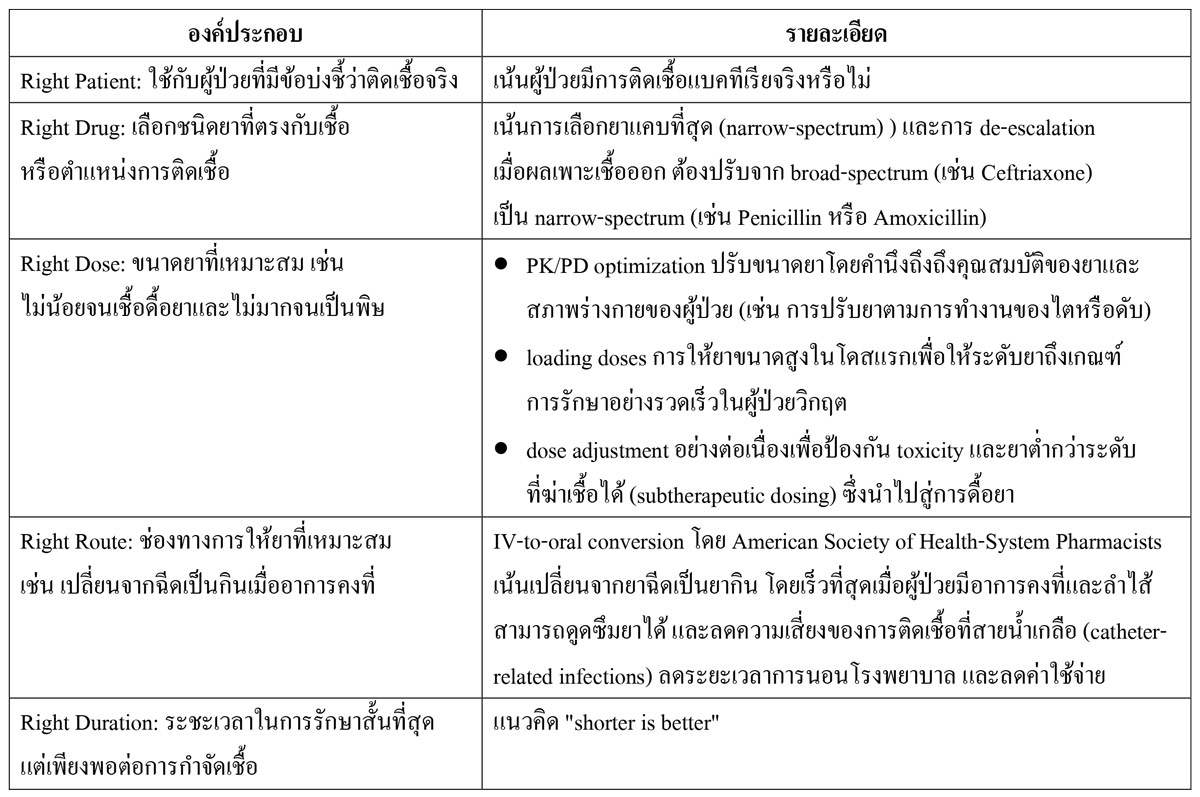
- sequential therapy (การให้ยาต่อเนื่องตัวเดิม) จากยาฉีดเป็นยากินที่เป็นตัวยาเดียวกัน
- switch therapy (การเปลี่ยนเป็นยากลุ่มเดียวกัน) เปลี่ยนจากยาฉีดเป็นยากินที่ไม่ใช่ตัวเดิม แต่เป็นยากลุ่มเดียวกันหรือมีขอบเขตการฆ่าเชื้อใกล้เคียงกัน เช่น Ceftriaxone (IV) เปลี่ยนเป็นยาต้านจุลชีพชนิดกิน Cefixime หรือ Cefdinir
- step-down therapy (การลดระดับความแรงของยา) เปลี่ยนจากยาฉีดที่มีฤทธิ์กว้างเป็นยากินที่มีฤทธิ์แคบลงหรือเจาะจงกับเชื้อมากขึ้น มักทำเมื่อทราบผลเพาะเชื้อแล้ว
- เน้นว่าระยะเวลาการรักษาไม่ควรถูกกำหนดตายตัวตั้งแต่ต้น แต่ควรประเมินตามการตอบสนองทางคลินิกของ
ผู้ป่วยร่วมด้วย - ปฏิเสธความเชื่อเก่าที่ว่า “ต้องกินยาให้ครบชุดเพื่อป้องกันการดื้อยา” แต่ให้ข้อมูลใหม่ว่า “การสัมผัสยาปฏิชีวนะนานเกินความจำเป็นต่างหากที่เป็นตัวขับเคลื่อนการดื้อยา
- เน้นการลดอุบัติการณ์ของ C. difficile, การแพ้ยา และพิษต่อไต/ดับ
แนวคิด shorter is better นี้ถือเป็นการเปลี่ยนแปลงกระบวนทัศน์ (paradigm shift) ครั้งสำคัญในวงการโรคติดเชื้อ อาศัย pharmacy – based interventions และ clinical interventions เน้นลดระยะเวลาการรักษา (optimization of duration) รายละเอียดดังตารางที่ 2
ตารางที่ 2 แสดงข้อมูลการเลือกใช้แนวคิด shorter is better ในเวชปฏิบัติ 7 – 14 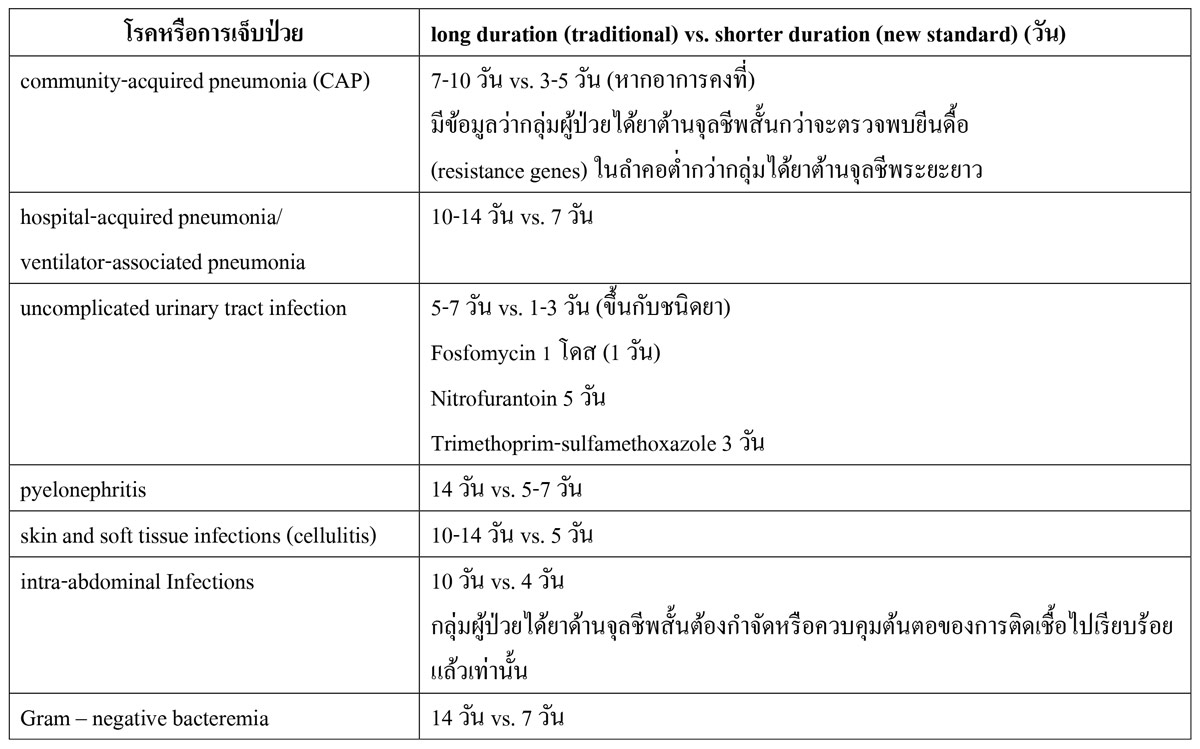
- Dumbre DU, Devi S, Chavan RG. Effect of antibiotics on physical and physiological development of children under 5 – A scoping review. Journal of Education and Health Promotion. 2024 May 1;13(1):164.
- Thaulow C, Blix HS, Nilsen RM, Eriksen BH, Wathne JS, Berild D, et al. Antibiotic use in children before, during and after hospitalization. Pharmacoepidemiol Drug Saf.2022;31:749-57. doi: 10.1002/pds.5438.
- World Health Organization. Antimicrobial stewardship programmes in health-care facilities in low – and middle – income countries : a WHO practical toolkit.
- Full Reference :American Society of Health-System Pharmacists (2010) ASHP statement on the pharmacist’s role in antimicrobial stewardship. American Journal of Health – System Pharnacy, 67 (7).
- Barlam, T.F., Cosgrove, S.E.Abbo,L.M.,MacDougall, C.,Schuetz,A.N.Septimus, E.J.,…&Trivedi, K.K. (2016). Implementing an antibiotic stewardship program : Guidelines by the Infectious Diseases Society of America and the Society for Healthcare Epidemiology of America. Clinical Infectious Diseases, 62(10),e51-e77.
- Centers for Disease Control and Prevention. Core elements of hospital antibiotic stewardship programs. (No Title).2019.
- “ Shorter is Better ” Official Database (2025 Update). ShorterlsBetter.org.
- Morros R, Moragas A, Garcia-Sangenis A, Monfa R, Miravitlles M, Vallejo-Torres L, Jarca CI,Llor C. Tailoring Antibiotic Duration for Respiratory Tract Infections in Primary Care : Protocol for a Pragmatic Randomized Controlled Trial Study (STORM). JMIR Research Protocols. 2025 Oct 20;14(1):e75453.
- Metlay, J.P., et al. (2019) Diagnosis and Treatment of Adults with Community-acquired Pneumonia. American Journal of Respiratory and Critical Care Medicine, 200(7), e45-e67.
- Williams DJ, et al. Short-Course vs Standard-Course Antibiotherapy for Community-Acquired Pneumonia in Children : The SCOUT Randomized Clinical Trial. JAMA Pediatrics, 2022
- Pugh R, Grant C, Cooke RP, Dempsey G. Short-course versus prolonged-course antibiotic therapy rot hospital-acquired pneumonia in critically ill adults. Cochrane Database of Systematic Reviews. 2011(10).
- Gupta, K.,et al. (2011) in International Clinical Practice Guidelines for the Treatment of Acute Uncomplicated Cystitis and Pyelonephritis in Women. Clinical Infectious Diseases, 52(5), e103-e120.
- Stevens,D.L.,et al.(2014). Practice Guidelines for the Diagnosis and Management of Skin and Soft Tissue Infections. Clinical Infectious Diseases, 59(2), e10-e52.
- Sawyer, R. G., et al. (2015). Trial of Short-Course Antimicrobial Therapy for Intraabdominal Infection (STOP-IT Trial). New England Journal of Medicine, 372(21),1996-2005.